Inside the tea-serving doll
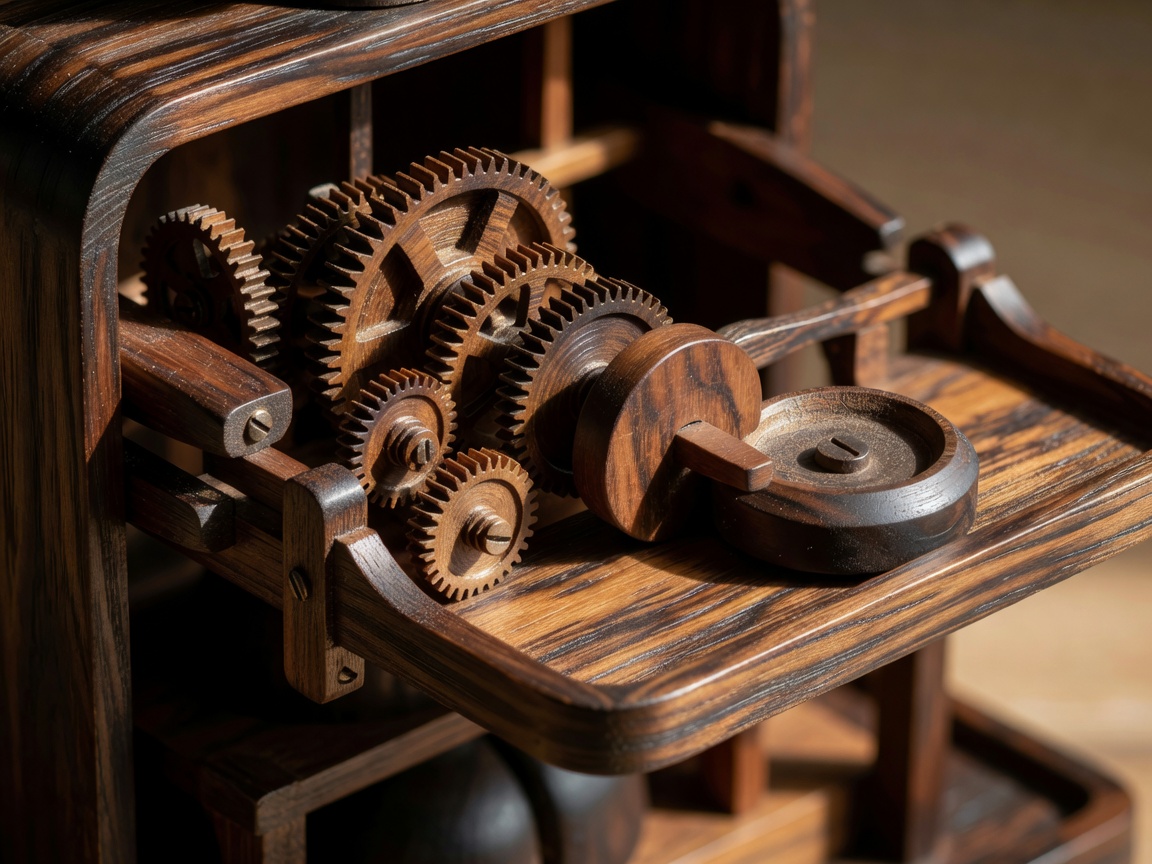
The chahakobi ningyō, or tea-serving doll, is the best-known Japanese karakuri automaton. Its energy comes from a coiled spring, made of whale baleen in Edo-period examples. Left alone, a spring would unwind in an instant, so a train of gears multiplies the number of turns and slows the release. A cam on one shaft rocks a linkage connected to the feet, giving the illusion of walking, while another controls a steering wheel so that the doll can turn and return.
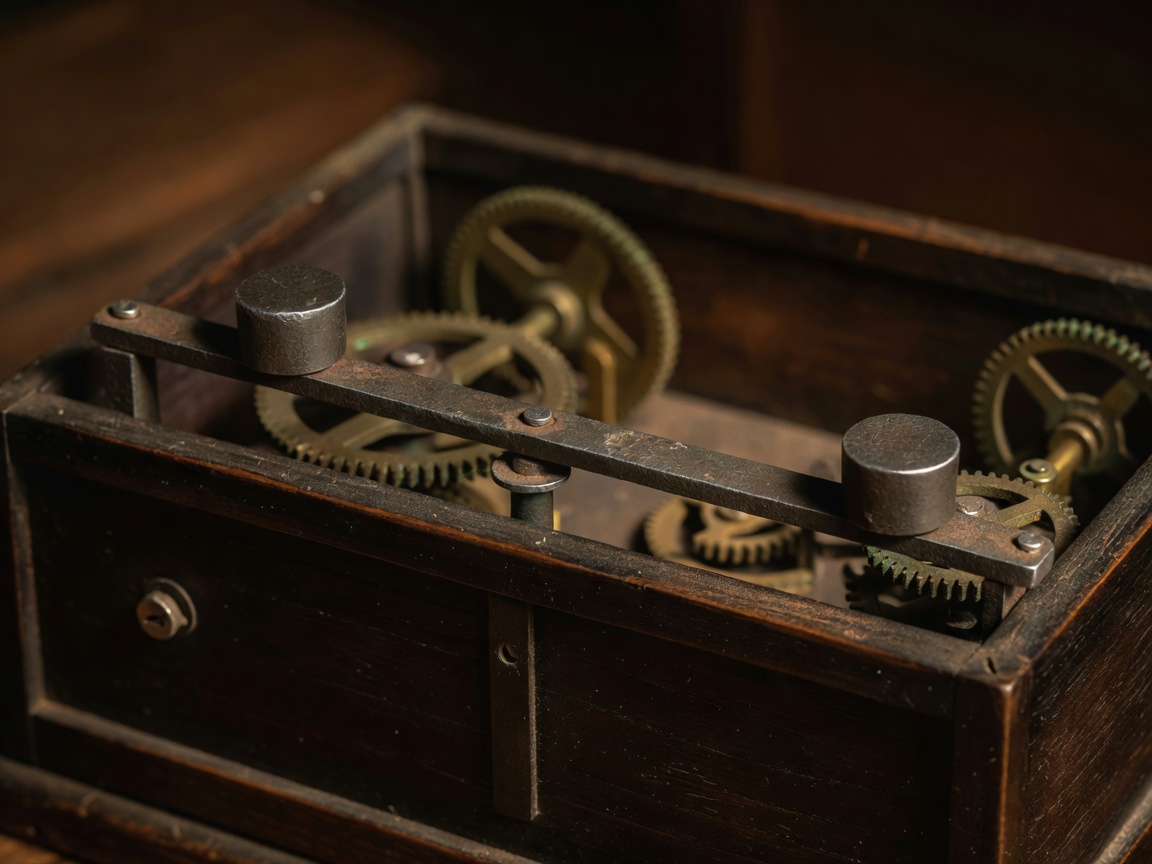
The stop is the clever part. The tray rests on a lever. A full cup presses the lever down, holding a brake clear of the gear train, and the doll moves. When a guest lifts the cup, the lever rises and engages the brake. Putting the empty cup back releases it again, and a pre-set cam profile sends the doll back the way it came.
- Wind the spring.
- Place a full cup: brake releases.
- Gear train drives wheels and leg cam.
- Cup lifted: brake engages.
- Cup returned: doll turns and goes back.
From printed diagrams to festival floats
We know the tea doll’s workings in detail because of the Karakuri Zui, published in 1796 by Hosokawa Hanzō Yorinao. It gives drawings and instructions for several mechanisms, and modern makers have built working dolls directly from it. That makes it unusual: most early automata survive either as objects with no instructions, or as descriptions with no objects.
Karakuri also appear at a larger scale on festival floats, such as those of the Takayama Festival in Gifu Prefecture and the Inuyama Festival in Aichi Prefecture, where puppeteers inside the float work the figures with strings and rods. These are performed mechanisms rather than self-running ones, and the distinction matters when you study them.
Tradition
Tanaka Hisashige, an Edo-period inventor, built karakuri such as an archery boy before turning to clockwork and later industrial engineering.
Modern interpretation
Cam-box automata cut from plywood use the same cam-follower principle without needing a spring motor.
Name the regulator
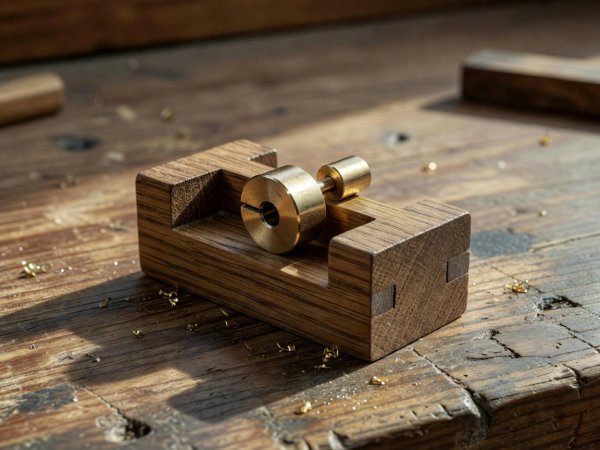
Any mechanism that runs over time needs something that limits speed: a gear ratio, a fan, a foliot, an escapement or a brake. If you cannot point to the regulator, you do not yet understand the mechanism.
Clocks for unequal hours
Edo Japan used temporal hours: daylight and night were each divided into six parts, so an hour’s length changed with the seasons. Japanese clocks, wadokei, adapted imported European mechanisms to this system, often with two foliots, one for day and one for night, or with movable hour markers on the dial.
Tanaka Hisashige’s Myriad Year Clock of 1851 combined a seasonally adjusting temporal-hour dial with several other displays in one case. The original survives at the National Museum of Nature and Science in Tokyo and is designated an Important Cultural Property of Japan.
Korea took a different route with water. Jang Yeong-sil’s Jagyeongnu of 1434 used flowing water and dropping balls to trigger striking figures. Today a reconstruction, not the original, is displayed at the National Palace Museum of Korea in Seoul.
Seismoscopes and bamboo dragonflies
Zhang Heng’s seismoscope of 132 CE is often shown as a bronze vessel with dragons dropping balls into the mouths of toads. No example survives, and the text describing it does not explain the internal mechanism. Every model you see is an interpretation, and different reconstructions use different pendulum designs. Treat them as hypotheses.
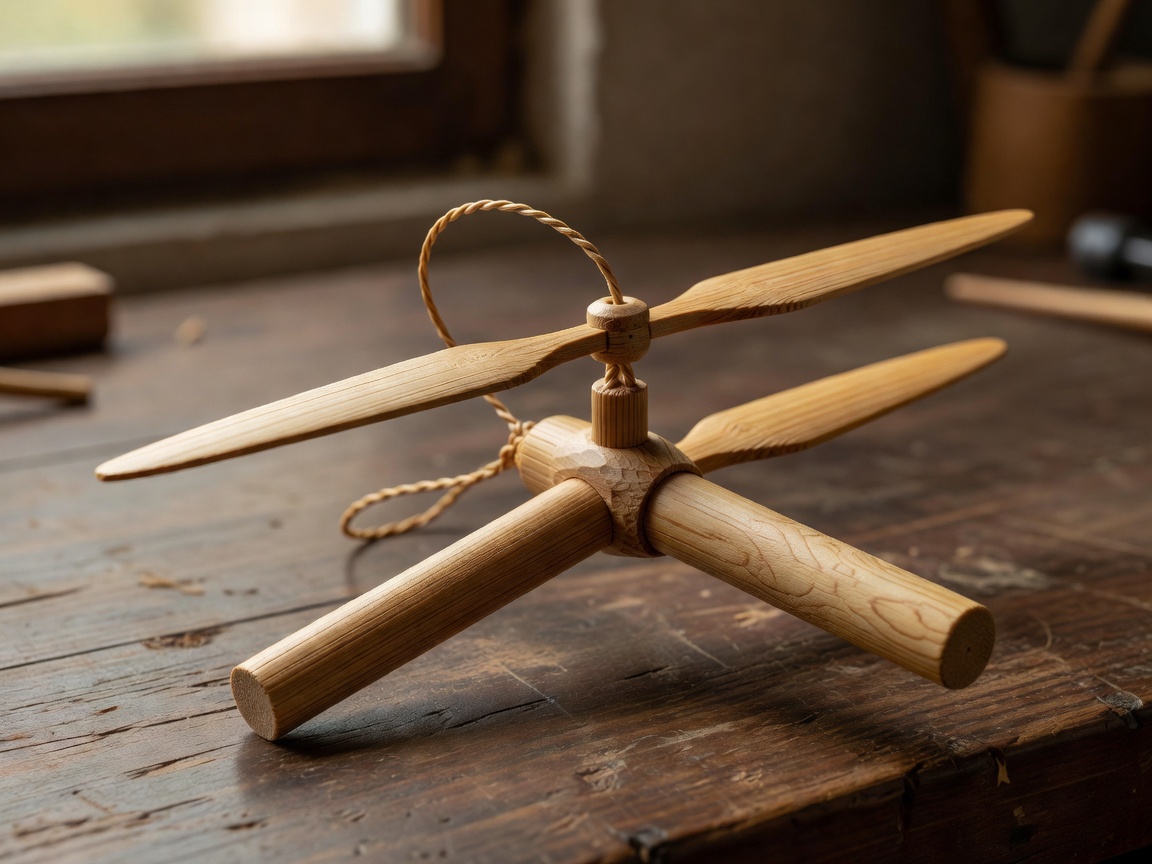
The bamboo dragonfly, known in Japan as taketombo, is the opposite case: a simple toy you can still make and test today. Spinning the shaft between your palms gives the angled blades lift. Carving one is a lesson in symmetry; an unbalanced rotor wobbles and falls short.
- Keep gear meshes slightly loose; tight meshes bind as wood moves.
- Polish pivots and wax them rather than oiling wooden bearings.
- Build a test frame before the decorative case.
Revisit wooden joints for case-making, or ask a question through Get in Touch.