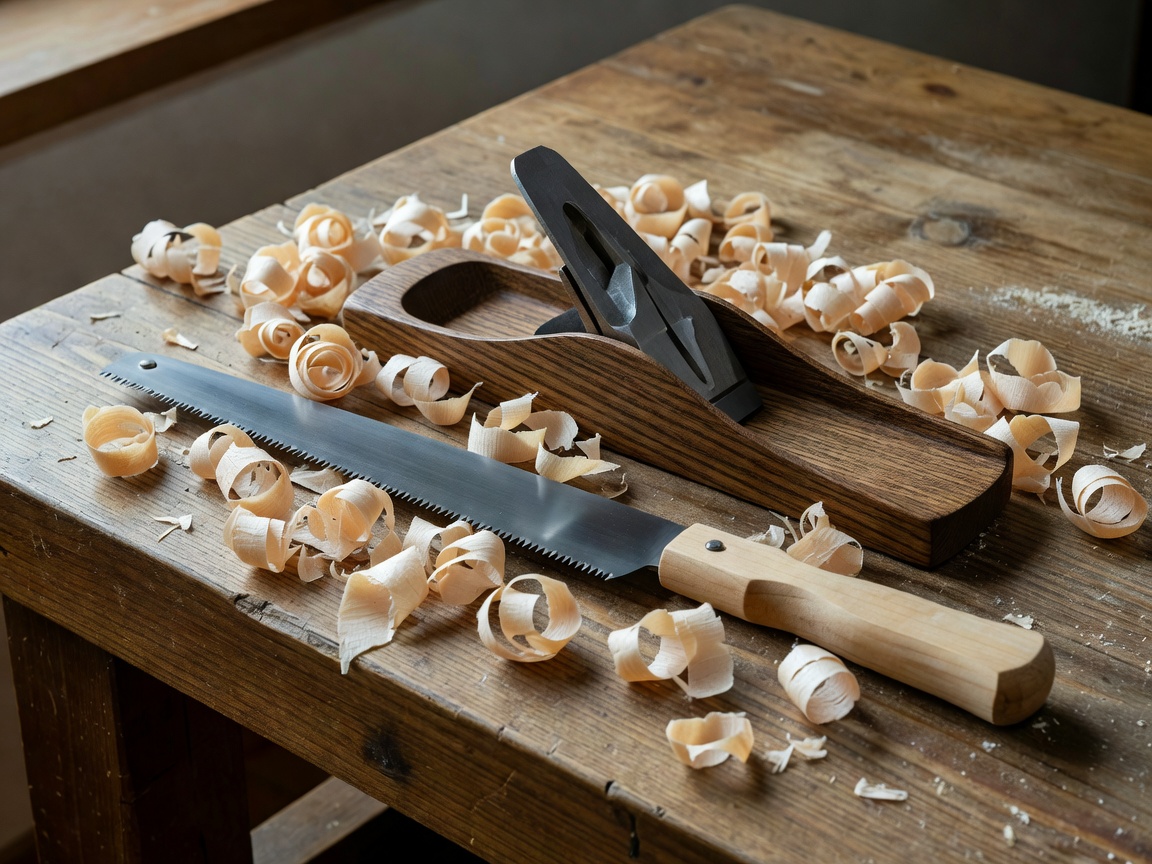
A joint is a mechanism that stays still
Every wooden joint is a small machine for redirecting load. A tenon turns a bending force into pressure against the walls of its mortise. A wedge converts a light hammer blow into a strong sideways squeeze. A key placed across a scarf joint turns tension, the force trying to pull two beams apart, into shear across the grain of a hardwood pin.
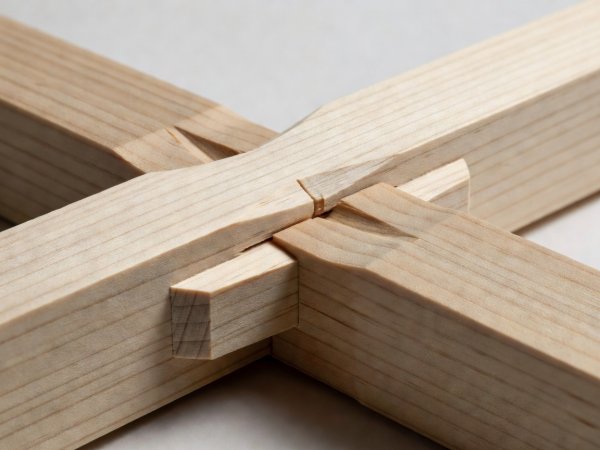
The Japanese kanawa tsugi scarf joint shows this clearly. Two beam ends are cut into matching stepped profiles with a slot running through their centre. When a tapered wedge, the shachi sen, is driven into that slot, the two halves slide in opposite directions until their shoulders bear tightly against each other. The joint now resists pulling, twisting and bending without a single nail.
Temple carpentry and furniture making
Japanese kigumi, the joinery of timber frames, developed for buildings that had to flex in earthquakes and survive seasonal humidity. Hōryū-ji in Nara, listed by UNESCO in 1993, contains some of the oldest surviving wooden buildings in the world, and its frames rely on interlocking members rather than metal fasteners. Furniture makers in the separate sashimono tradition applied similar thinking at smaller scale, often in paulownia (kiri), a light wood valued for chests because it moves little with humidity.
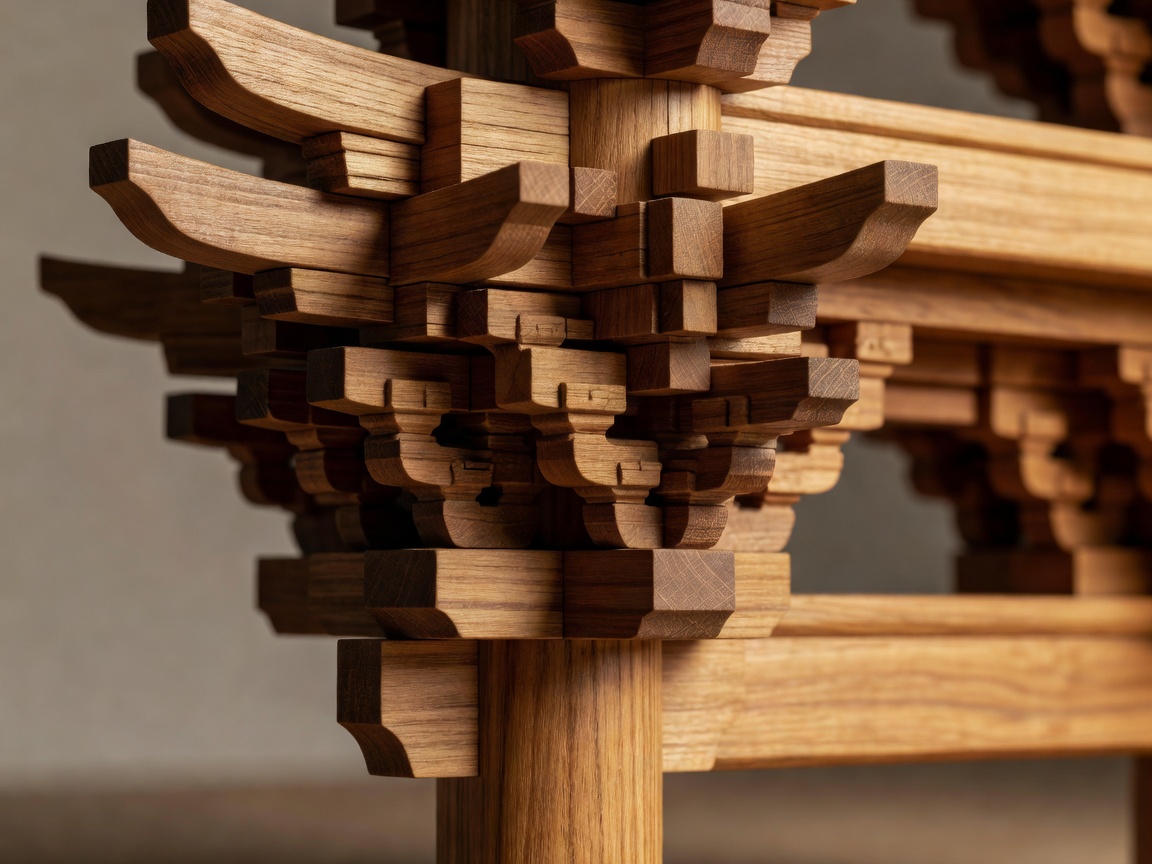
In China, the bracket set or dougong solved a different problem: carrying the heavy, deep eaves of a tiled roof out beyond the columns. Stacked blocks and arms spread the load step by step down to the column head. Li Jie’s Yingzao Fashi, issued in 1103, standardised these members using a modular unit (cai) so that builders could scale a hall up or down while keeping proportions consistent.
Tradition
Dougong sets carried roof loads in Song-dynasty official buildings, following modules recorded in the Yingzao Fashi.
Modern interpretation
A tabletop dougong model cut from cedar shows how load passes through each block when you press down on the top arm.
Grain decides everything
Wood is strong along its fibres and weak across them. Before cutting any locking joint, mark which way the grain runs in every part. Wedges and keys should always press across the grain of the piece they lock, never split along it.
Burr puzzles: locking by sequence
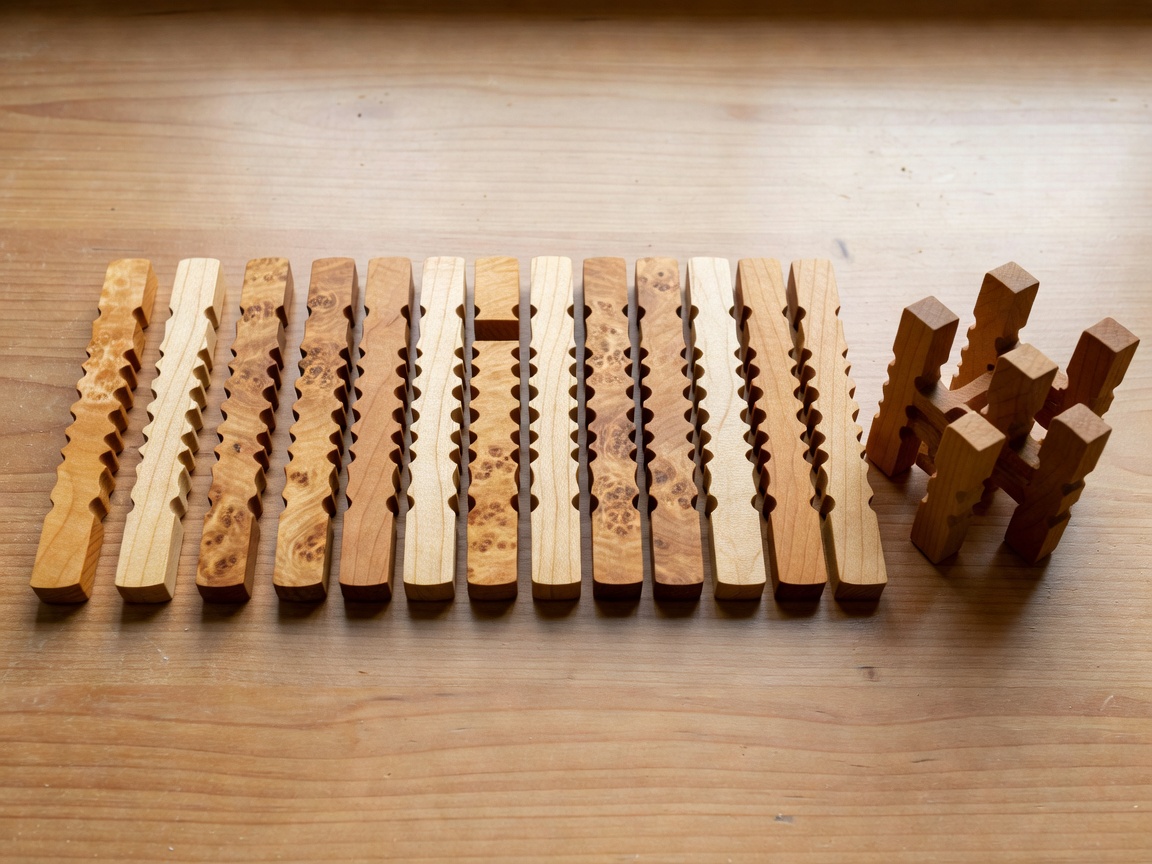
The interlocking burr, known in Chinese as a Lu Ban suo (Lu Ban lock), holds together through friction and order rather than glue. Six or more notched sticks pass through one another, and one final piece, often unnotched, slides in last to lock the rest. Remove that key and the assembly opens in a fixed sequence. The attribution to Lu Ban, the legendary carpenter of the Spring and Autumn period, is traditional rather than documented, so treat it as a story about craft identity rather than history.
The useful lesson for a maker is tolerance. Cut the notches too tight and seasonal swelling jams the puzzle; cut them loose and it falls apart. A burr is therefore an excellent first exercise in accurate marking and paring.
- Square three sticks to identical section.
- Mark notches from one reference face only.
- Saw the shoulders, then pare to the line.
- Join the two notched pieces at right angles.
- Slide the plain key through to lock.
Pull, push and pare
Japanese saws (nokogiri) and planes (kanna) cut on the pull stroke, which keeps a thin blade in tension. Chinese and most Korean planes are traditionally pushed, much like European ones. Neither approach is superior; choose the one that lets you see your line.
| Tool | Cutting stroke | Associated tradition |
|---|---|---|
| Nokogiri saw | Pull | Japan |
| Kanna plane | Pull | Japan |
| Bow (frame) saw | Push or pull, by setup | China |
| Wooden-bodied plane | Push | China, Korea |
- Hinoki
- Japanese cypress; fine, straight grain for practice joints.
- Kiri
- Paulownia; very light and stable, used for chests.
- Hard maple
- Accessible modern substitute for keys and wedges.
Continue with small mechanical assemblies or see how the same logic appears in folded paper.