The shishi-odoshi: a lever that fills itself
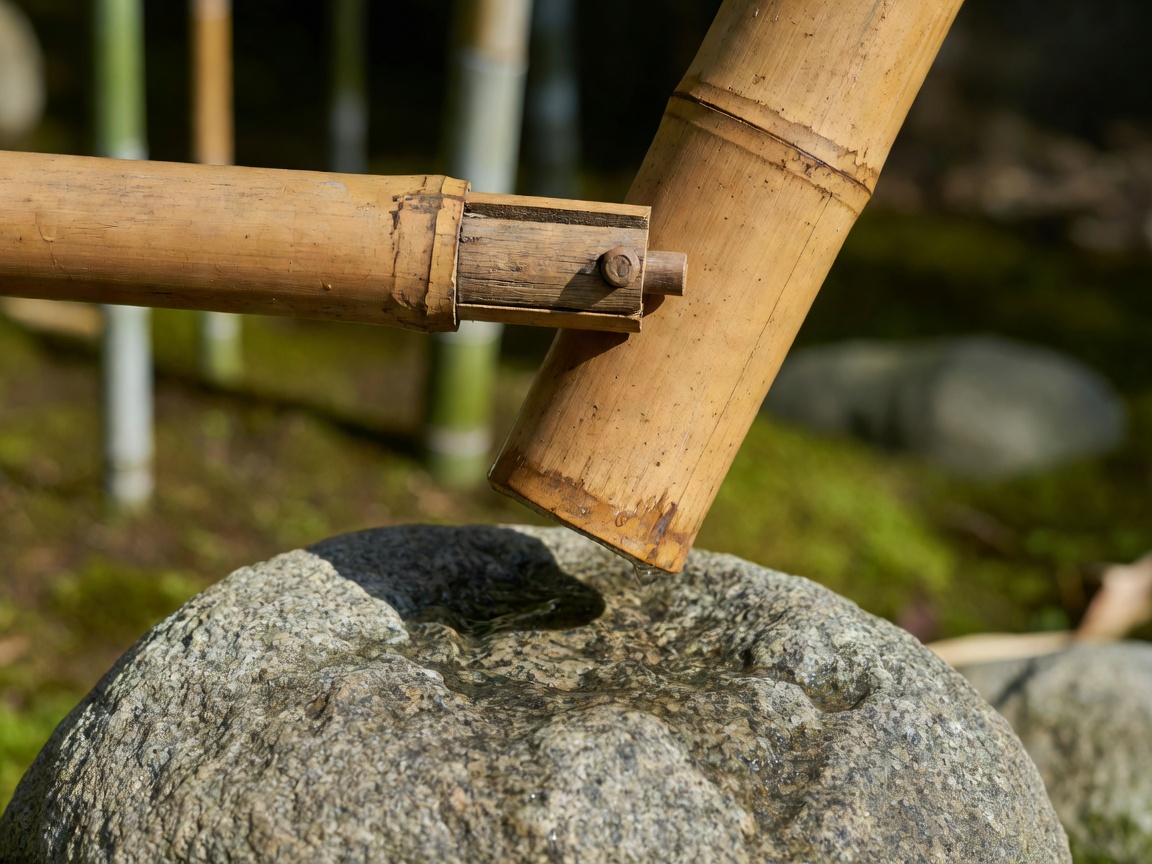
A shishi-odoshi is a length of bamboo pivoting on a pin, closed at one end by a node and open at the other. Water trickles into the open end. While the tube is nearly empty, the heavier closed end rests down against a stone. As water collects, the centre of mass shifts past the pivot, the tube tips, the water pours out, and the now-lighter closed end falls back with a sharp knock.
It is a self-resetting first-class lever powered by a slow, steady input. The original purpose, as the name “deer scarer” suggests, was to frighten animals away from crops. In Japanese gardens it became a sound marker in a quiet space; Shisen-dō in Kyoto, the retreat of the poet Ishikawa Jōzan, is often associated with it.
- Water fills the open end.
- Centre of mass crosses the pivot.
- Tube tips and empties.
- Closed end drops and strikes the stone.
Find the pivot, then find the balance
Most household mechanisms are levers. Locate the pivot, then ask where the load and the effort sit relative to it. That single observation explains why a tool feels easy or tiring to use.
The square-pallet chain pump
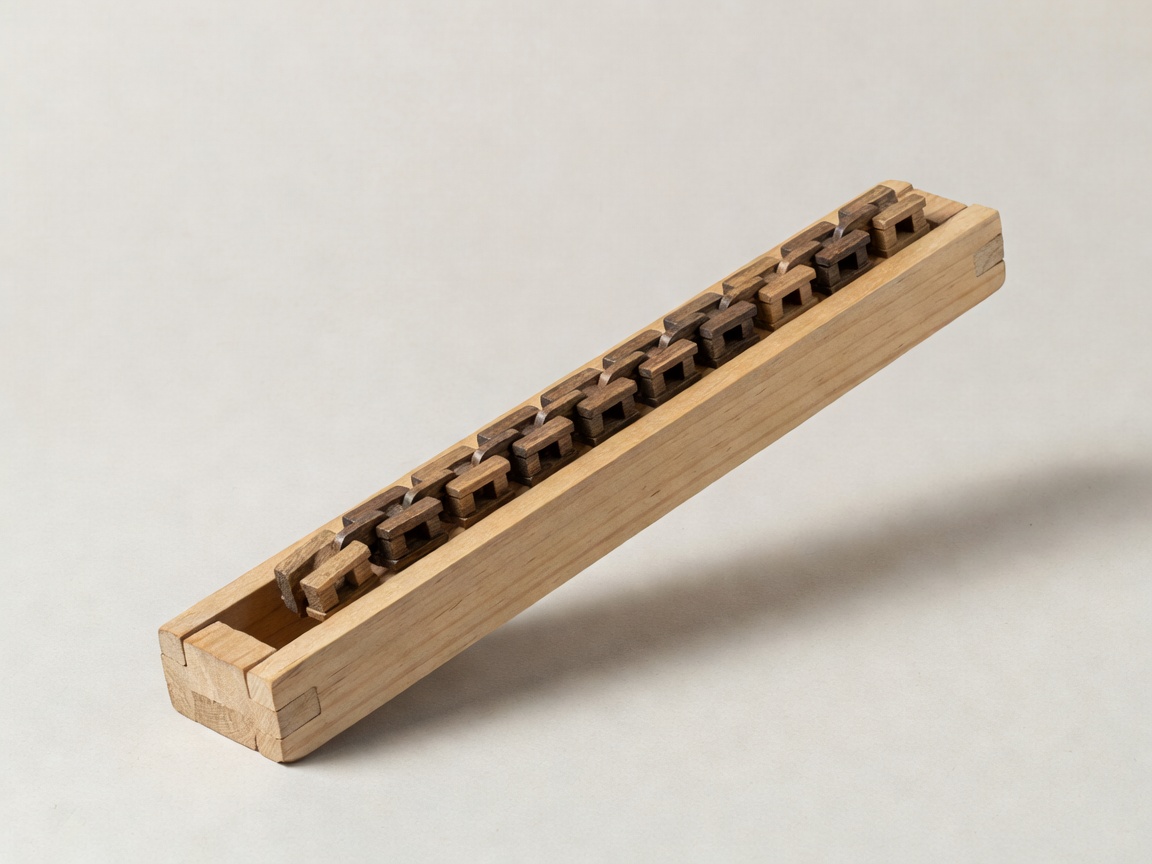
In Chinese farming households, raising water from a channel to a field was daily work. The square-pallet chain pump, fanche or “dragon-backbone” machine, used a loop of wooden pallets linked like a chain, running up an inclined trough. Turning a sprocket at the top, by foot treadles or by hand cranks, dragged the pallets upward, and each one pushed a slug of water ahead of it.
Song Yingxing illustrated such pumps in the Tiangong Kaiwu of 1637. The force path is direct: human legs drive the sprocket, the sprocket pulls the chain, and the trough walls keep water from slipping past each pallet. Leakage around the pallets is the main loss, which is why fit matters more than speed.
Tradition
Treadle-driven chain pumps, illustrated in the Tiangong Kaiwu, lifted irrigation water a short height over long working days.
Modern interpretation
A tabletop model with a plywood trough and cardboard pallets on a cord loop demonstrates the principle with a cup of water.
Cutters and scrapers from South India
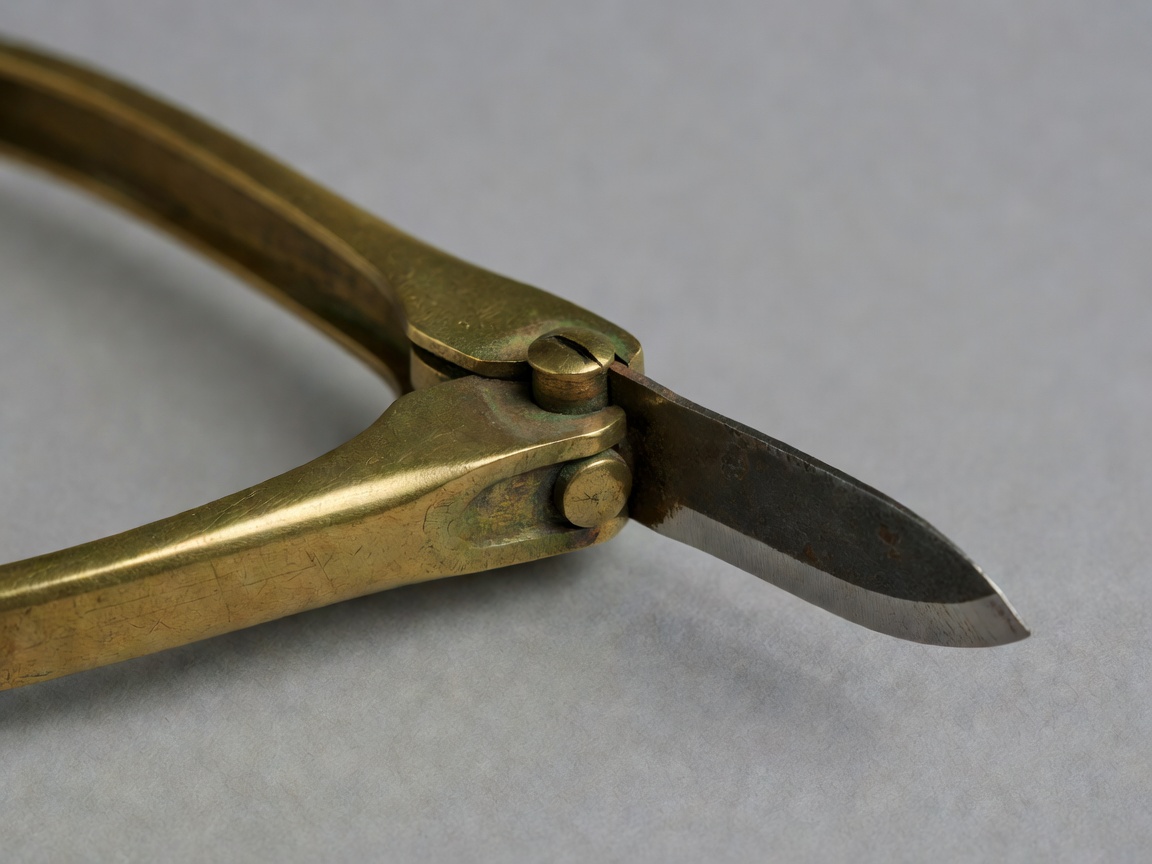
The Indian betel-nut cutter, or sarota, is a pair of hinged arms with a blade on one side. The nut sits close to the pivot and the hands squeeze far from it, so a modest grip becomes a strong cutting force. Many surviving examples are cast or forged brass and iron, often decorated, but the mechanical idea is a plain second-class lever like a nutcracker.
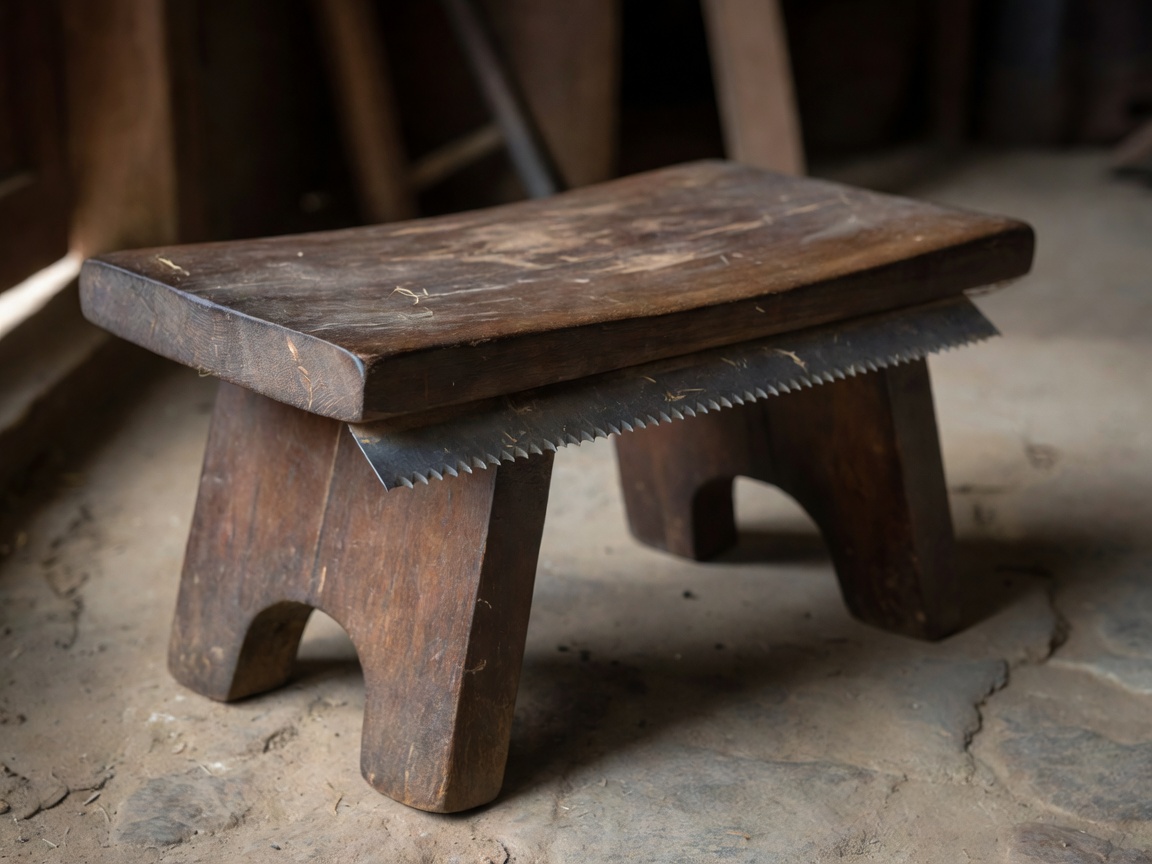
The Kerala coconut scraper, the chirava, takes a different approach. A low wooden stool carries a serrated metal blade projecting from one end. The cook sits on the stool, and their body weight fixes the tool in place while their hands rotate a coconut half against the teeth. The user’s own mass replaces a clamp, an elegant answer when the job needs both hands free.
- Brass
- Corrosion-resistant body for cutters used near moisture.
- Tempered steel
- Blade edges and serrations that hold sharpness.
- Hardwood stool
- Stable, heavy base that resists tipping.
Bringing the ideas home safely
The point is not to copy objects exactly but to reuse their reasoning. A balcony shishi-odoshi can run from a small recirculating pump; tune the pivot position so the tube tips at roughly two-thirds full. A wall-mounted cutter can borrow the sarota’s pivot placement. A bench hook that you hold down with your own weight follows the chirava’s logic.
Safety: keep sharp household blades guarded when not in use, and never combine mains-powered pumps with open water without a suitable residual-current device.
See also how wooden joints handle load, or explore miniature builds that use the same levers at smaller scale.